
In 2026, the most successful office fit-out projects will prioritise clarity, flexibility and performance. What’s in is smarter layouts, integrated delivery, sustainable materials and adaptable spaces. What’s out is over-designed offices, fragmented project teams and fit-outs that look impressive but don’t work in practice.
These shifts reflect how businesses are actually using their workplaces and why more organisations are choosing turnkey office fit-outs to manage risk, cost and complexity.
Why are workplace fit-out trends changing?
Over the last few years, workplace expectations have shifted significantly. Offices are no longer designed simply to accommodate desks. They now need to support collaboration, wellbeing, brand identity and flexibility, while remaining cost-effective.
At the same time, businesses increasingly want:
Greater cost certainty
Shorter project timelines
Clear accountability
Less demand on internal teams
At DSP, we are seeing these priorities directly influence how turnkey office fit-outs are designed and delivered. The trends below are based on live projects, client feedback and what is proving to work in real workplaces.
What’s In: The trends defining high-performing workplaces
1. Intentional layouts
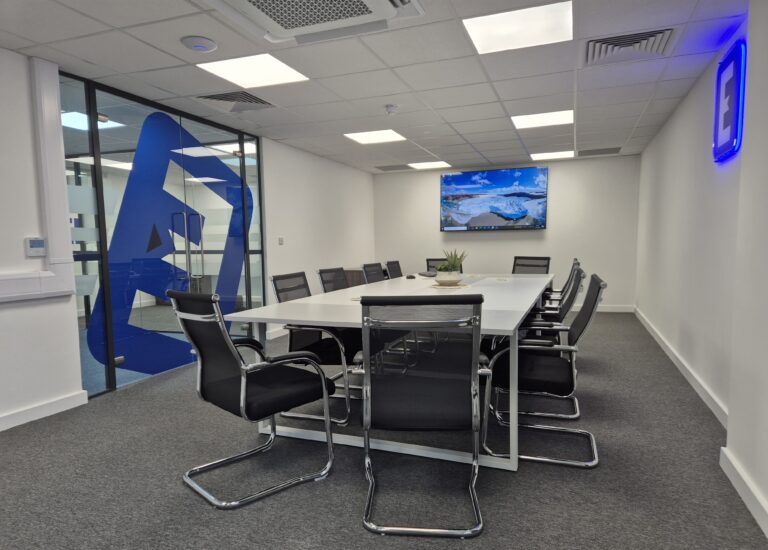
Flexibility is no longer about open-plan offices. It is about intentional layout planning that supports different ways of working without creating distraction or confusion.
Rather than large, undefined spaces, offices are being designed with clarity around purpose and adjacency.
In practice, this includes:
Clearly defined zones for focus, collaboration and social interaction
Layouts that reduce unnecessary movement
Wayfinding that feels calm and predictable
Spaces that can be reconfigured without major disruption
Within a turnkey office fit-out, layouts are planned early alongside services, lighting, acoustics and furniture. This allows flexibility to be built in from the outset rather than be retrofitted.
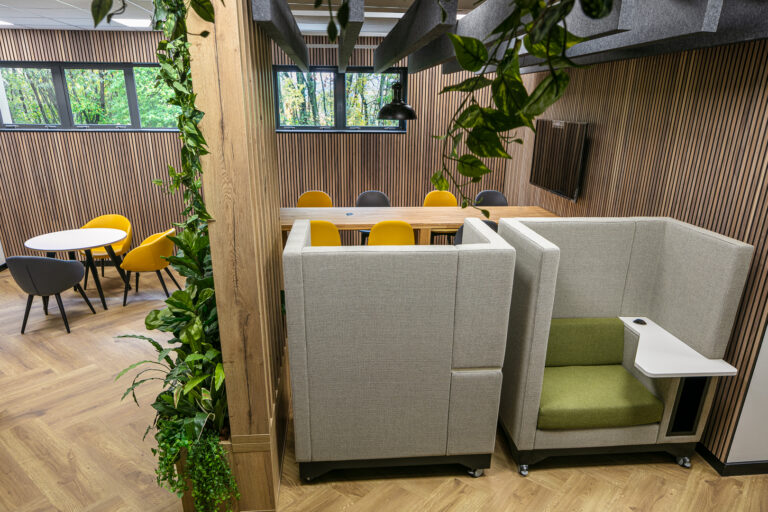
2. Inclusive design
There is growing awareness that around one in six people in the workplace is neurodivergent. Offices are increasingly being designed to support a wider range of cognitive needs.
High-performing workplaces now prioritise choice, predictability and environmental control, allowing people to work in ways that suit them.
Design responses we are incorporating into turnkey projects:
A balance of quiet, low-stimulation spaces and collaborative areas
Clear wayfinding and logical layouts to reduce cognitive load
Careful use of colour, contrast and pattern
Lighting that avoids glare and flicker
Improved acoustic control across the workplace

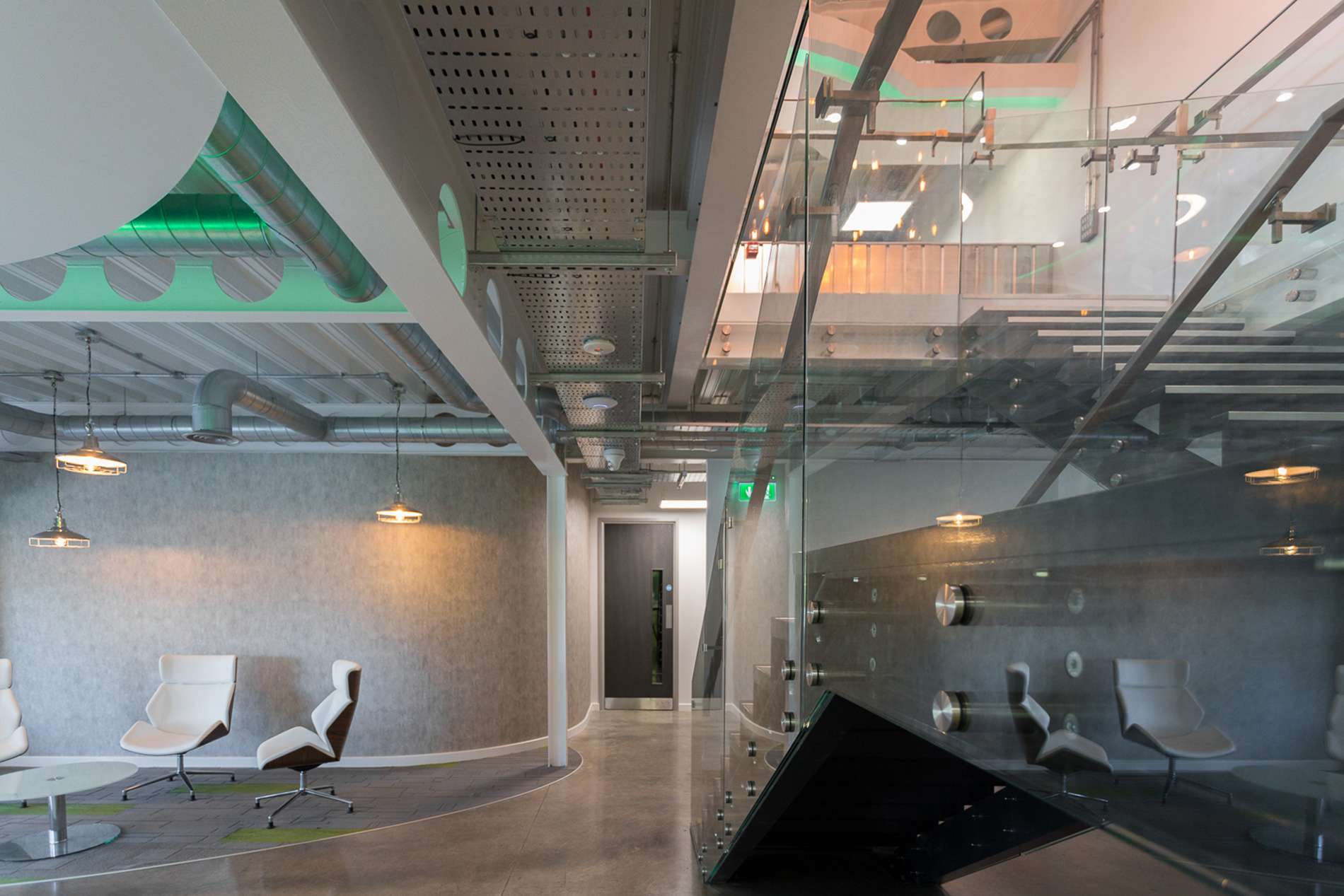
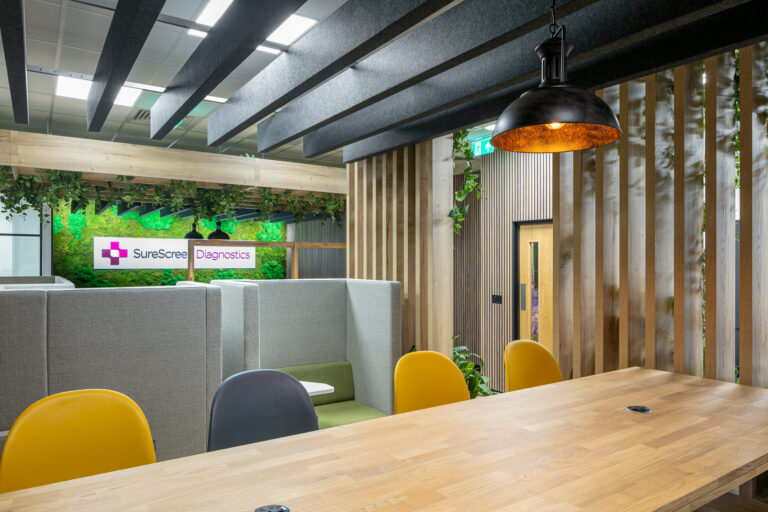
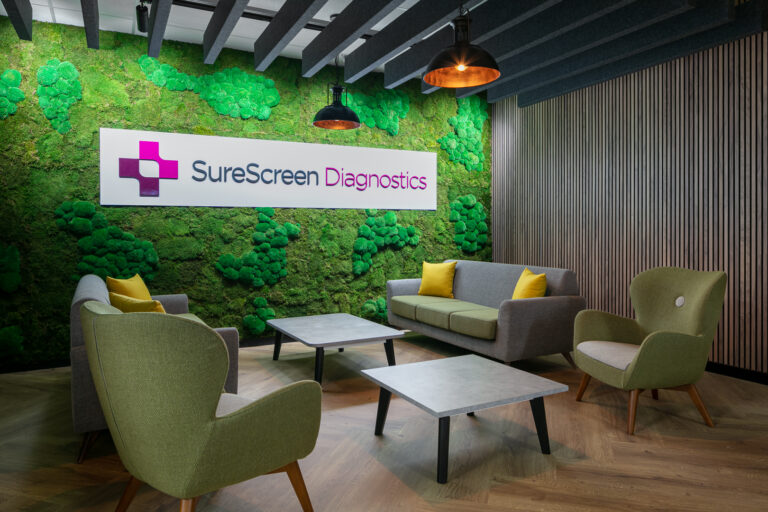
3. Softer material palettes
Workplaces continue to move away from cold, corporate finishes toward warmer, more tactile materials. The trend we call Resimerical design.
Materials such as:
- Timbre and timbre-effect finishes
- Textured acoustic panels and fabrics
- Muted, neutral colour palettes with soft contrast
- Natural stone-effect surfaces
In tunrkey fit-outs material selection is balanced early against cost, maintenance and programme to avoid late-stage changes.
4. Lighting
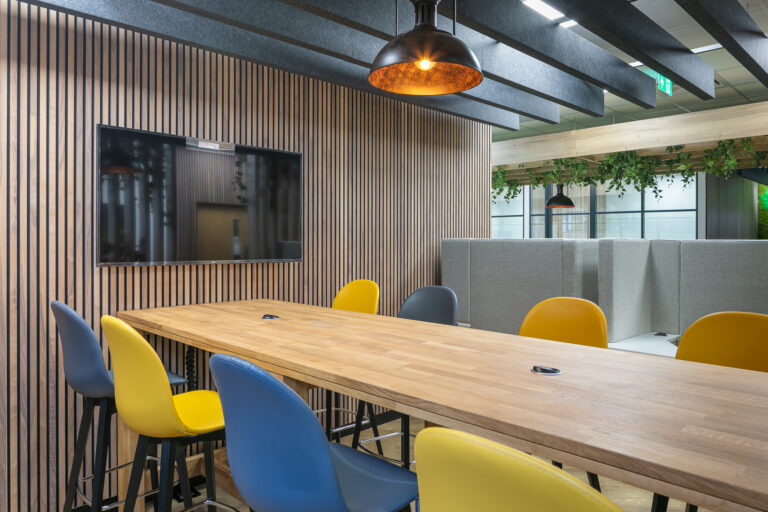
Lighting is increasingly being used to define spaces and support employee wellbeing.
Design led-lighting approach includes:
- Layered lighting instead of uniform ceiling grids
- Feature lighting in entrances and collaboration areas
- Warmer light in focus spaces
- Integrated lighting in feature spaces
5. Technology
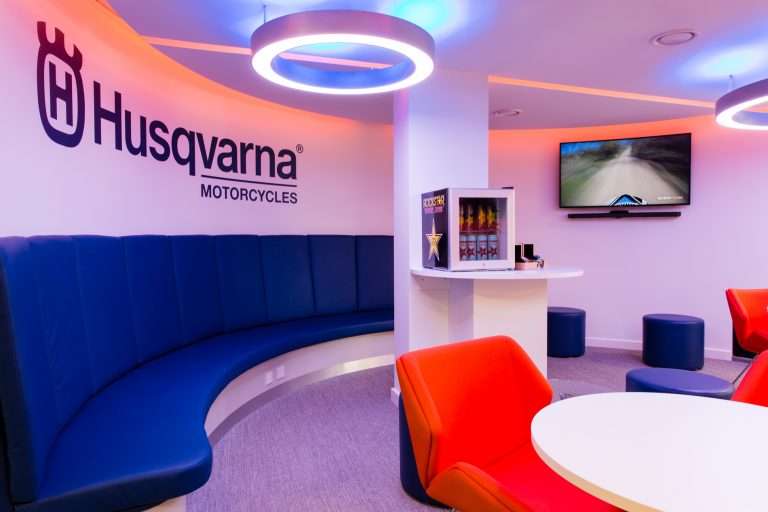
Technology remains essential but the focus has shifted to reducing visual clutter and improving user experience.
In practice, this means:
- Wireless presentation systems
- Integrated power within furniture and joinery
- Fewer screens in focus areas
- Concealed cabling and floor boxes
When technology, furniture and construction are coordinated as a single solution, the result is a cleaner and more intuitive workplace.
6. Sustainability
Sustainability is now expected as standard. The emphasis is moving away from surface-level gestures and towards decisions that deliver long-term value.
What we are seeing more of:
Reuse of existing elements where possible
Durable, low-maintenance finishes
Energy-efficient lighting and systems
Reduced waste through better coordination
Turnkey delivery simplifies sustainable decision-making because procurement, design and construction are aligned from the start.
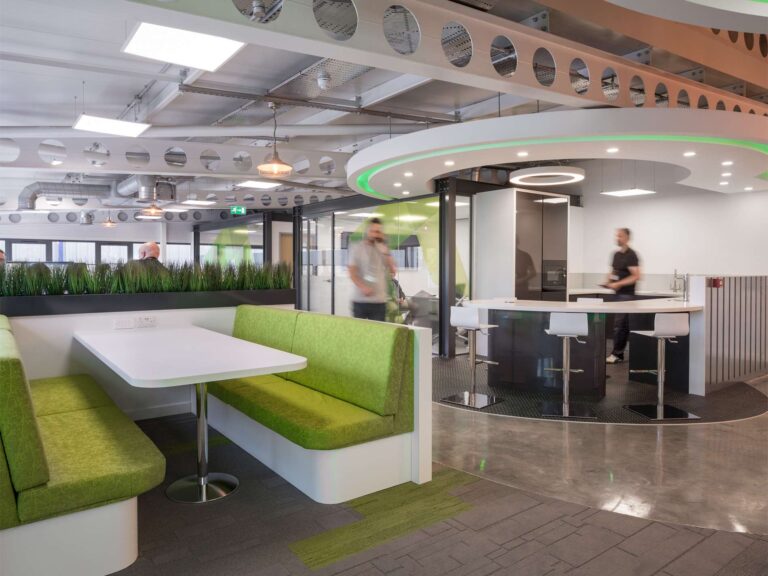
What’s Out
Over-designed spaces with no clear function
Fragmented project teams and unclear responsibility
One-size-fits-all office layouts
Fit-outs designed without consideration for future change
Adding wellbeing or sustainability features as an afterthought
Trend summary: What’s in & What’s out
| In | Out |
|---|---|
| Intentional, zoned layouts | Generic open plan |
| Inclusive design | Overstimulating environments |
| Warm, tactile materials | Cold, corporate finishes |
| Feature and layered lighting | Traditional lighting grids |
| Integrated turnkey delivery | Fragmented project teams |
What this means for your next fit-out
The most important consideration is not just how the office looks, but how it is designed and delivered.
A turnkey approach enables:
Clear accountability
Better alignment between design and build
Earlier cost certainty
Reduced risk and smoother delivery
From a design perspective, it also allows for more thoughtful, inclusive and adaptable workplaces.
FAQs
Are these trends relevant to refurbishment projects?
Yes. Many of these principles apply equally to refurbishments, particularly layout clarity, lighting upgrades and inclusive design.
Are turnkey fit-outs only suitable for large projects?
No. Turnkey delivery is often especially valuable on small and medium-sized projects where internal resources are limited..
Does this limit creativity?
No. In practice, it often leads to calmer, more purposeful spaces that support a wider range of users.
Ready to transform your office?
Speak to our team about your project at sales@dsp-solutions.co.uk or call 01332291618 to discover how we can help transform your office.